
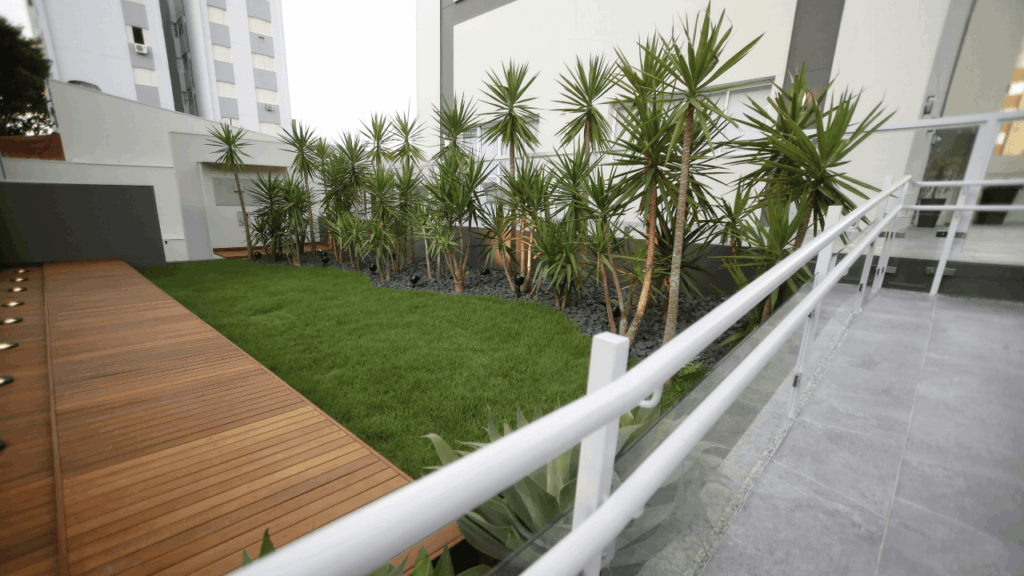
Designing a rooftop garden in New York City is a high-stakes, high-reward endeavor. Space is scarce, structural constraints are strict, and microclimates on the roof can be brutal. But when done right, a rooftop garden can deliver stormwater management, thermal insulation, pollinator habitat, and stunning human amenity. For professional landscapers, architects, and ecological designers, mastering the technical, regulatory, and maintenance challenges is what separates a successful project from a failed one.
Below is a deep dive into what matters most—from structural engineering to irrigation strategies, regulatory demands to plant choices—so your next rooftop project isn’t just beautiful, but resilient, cost-effective, and ecological.
Regulatory & Tax Incentive Landscape
Before you draw a planting plan, you must understand the regulatory context in NYC.
- The NYC Department of Buildings requires a Professional Engineer (PE) or Registered Architect to certify that any green roof or rooftop garden does not exceed the structural capacity of the roof.
- To qualify for the NYC Green Roof Property Tax Abatement Program, the green roof must cover at least 50% of the rooftop area, with at least 80% vegetation viability, and a four-year maintenance plan must be submitted and enforced [3].
- The NYC Department of Environmental Protection’s stormwater and green infrastructure guidelines outline standards for modular planting trays, planting media depths, drainage, and overflow design [4].
- The High Performance Landscape Guidelines emphasize engineered soils, minimizing disturbance, and designing for rooftop runoff management (e.g., planter boxes, green/blue roofs) [4].
Ignoring these early can lead to expensive rework or noncompliance.
Structural Constraints & Weight Management
One of the first technical hurdles is rooftop load capacity.
- According to the DDC Cool & Green Roofing Manual, the saturated weight load for intensive (garden-style) green roofs can range between 60 to 200 pounds per square foot (psf), depending on soil depth, plant mass, water content, and amenities [1].
- Semi-intensive systems (6–12″ soil depth) typically fall at the lower end of that range.
- Engineers must model dead load + live load + wind uplift to ensure safety.
Weight reduction strategies include:
- Lightweight engineered soils (high mineral content, perlite/expanded shale)
- False-bottom planters or foam cores to reduce soil mass
- Modular planting trays for lighter, faster installs
- Even load distribution, avoiding heavy point loads
Waterproofing, Drainage, and Roof Membrane Interface
A rooftop garden is only as good as its waterproofing.
- NYC guidelines require rigorous waterproofing layers, root barriers, and careful detailing at penetrations and perimeters [4].
- Filter fabrics should separate soil media from drainage layers to prevent clogging.
- Overflow systems must be installed so water never exceeds the roof’s load tolerance [5].
Neglecting waterproofing details is one of the most common causes of rooftop garden failure.
Wind, Sun, and Microclimate Realities
Rooftops are harsh environments. Wind, sun, and heat extremes must be accounted for.
- Dark roof surfaces can reach 170°F on summer days, creating thermal stress on plants [4].
- Wind exposure is higher aloft; use wind-tolerant plants, mesh windbreaks, and anchored planters [5].
- Microclimates vary depending on shading from adjacent buildings—plant accordingly.
- Species selection should lean toward wind- and drought-tolerant plants suited to NYC’s urban zone 7, with buffers for freeze-thaw cycles [5].
Always do an on-site wind/sun mapping survey (anemometer, sun charts) before finalizing species or layout.
Irrigation, Water Budget, and Maintenance
Water is the most common failure point in rooftop gardens.
- Exposed plantings require frequent irrigation, often daily during heat waves [5].
- Drip irrigation is preferred to minimize evaporation and deliver water to root zones [5].
- Rainwater harvesting and cisterns can reduce reliance on hauled water [5].
Maintenance is ongoing—lines must be flushed, leaks repaired, emitters unclogged, and failed plants replaced. Designs that reduce labor are smart, but there is no such thing as “maintenance-free.”
Plant Selection Strategies
Choosing the right species is as technical as load calculation.
- Favor low, coarse, wind-tolerant, deep-rooted plants [5].
- Use sedums, grasses, and shrubs over tall trees unless structure allows.
- Prioritize natives or regionally adapted plants resilient to NYC conditions [5].
- In containers, choose plants hardy to zones 5–6 as a buffer for winter extremes [5].
Also plan for seasonal replacement—not every planting will survive a full year, especially early on
Risk Mitigation & Construction Best Practices
- Phased installation: Pilot zones before scaling up.
- Mock-ups: Test planter modules for moisture and stability.
- Access planning: Include maintenance walkways.
- Redundancy: Duplicate critical drainage and overflow systems.
- Documentation: Maintain plans for warranty claims and future repairs.
Performance Monitoring & Metrics
Track performance of your rooftop garden in NYC to prove success and optimize over time:
- Soil moisture trends
- Plant survival and replacement rates
- Drainage volumes pre- and post-installation
- Indoor temperature/energy reductions
- Monthly maintenance hours logged
Transparent reporting builds long-term credibility.
Design Once, Last Decades – The Smart Approach to Rooftop Gardens in NYC
A rooftop garden in NYC is not just a design challenge, it’s a complex integration of structure, ecology, hydrology, horticulture, and data. The projects that thrive are those whose designers anticipate constraints, build maintenance into the design, and measure outcomes over time.
If you’re preparing a rooftop in NYC and want a partner who understands every technical pitfall, aesthetic goal, and ecological opportunity – let’s collaborate. Contact the expert team at Eco Brooklyn today.
References
- City of New York Department of Design and Construction. (2007). Cool & green roofing manual. https://www.nyc.gov/html/ddc/downloads/pdf/cool_green_roof_man.pdf
- United States Environmental Protection Agency. (2021). Best management practice: Green roofs. https://www.epa.gov/system/files/documents/2021-11/bmp-green-roofs.pdf
- City of New York Department of Finance. (n.d.). Green roof tax abatement. NYC.gov. https://www.nyc.gov/site/finance/property/landlords-green-roof.page
- MNLA, & New York City Department of Design and Construction. (2013). Green buffers final report. Soil and Water Conservation District of NYC. https://www.soilandwater.nyc/files/30a7d0ce8/green_buffers_final_report.pdf
- City of New York. (n.d.). Green roof property tax abatement program. NYC Business. https://nyc-business.nyc.gov/nycbusiness/description/green-roof-property-tax-abatement-program