
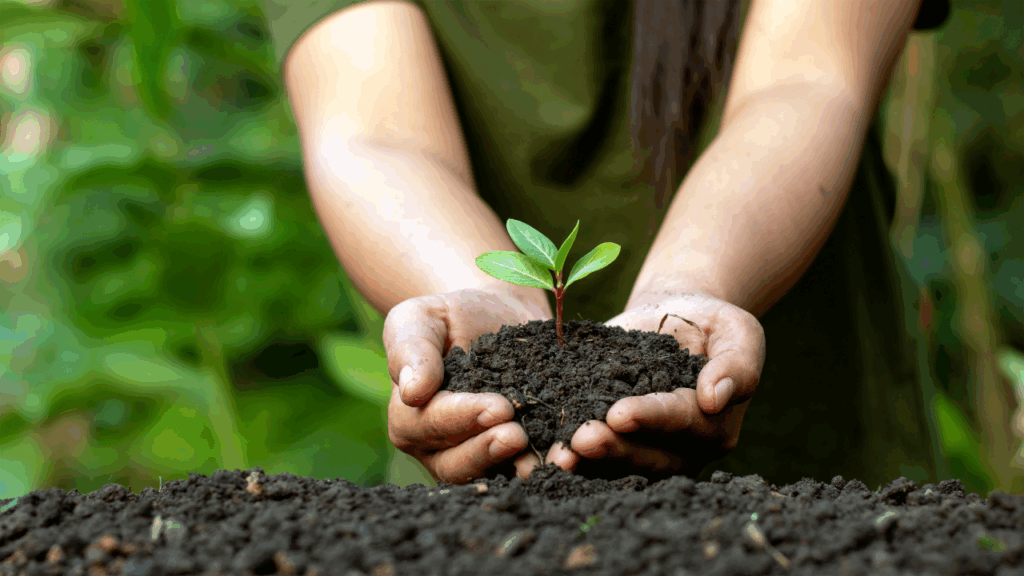
In an era of instant gratification and rapid urban development, the landscaping profession faces increasing pressure to deliver quick visual results. But for those committed to ecological integrity, there is a growing recognition that time—not speed—is the most important design element. At Eco Brooklyn, our work as ecological landscapers and green wall installers in New York has taught us that slow, adaptive landscaping processes yield more resilient ecosystems, healthier soils, and deeper community connections. This article makes the case for “slow landscaping” as a strategy, ethic, and design philosophy.
The Problem With Instant Green
Most clients want lush greenery the day the project wraps. This has driven the rise of plug-and-play plant palettes, pre-assembled living wall panels, and ornamental features optimized for curb appeal. But this speed comes at a cost:
- Ecological instability: Fast installations often use overgrown nursery stock grown in artificial conditions. These plants struggle to adapt to the site’s microclimate, leading to dieback and replacement cycles.
- Shallow root systems: Instant impact usually means shallow planting, compacted soil, or root-bound specimens.
- Biodiversity loss: Rapid installation rarely accounts for habitat needs, seasonal dynamics, or succession.
As designers and professional landscapers in New York, we see these symptoms all too often—particularly in rooftop gardens and vertical green walls where space and soil are already constrained.
The Case for Time as Design Material
Slow landscaping embraces the fact that ecological systems unfold over time. Instead of fighting that truth, it incorporates it.
1. Successional Planting, Not Finished Products
Rather than trying to install a climax ecosystem on day one, slow landscapes begin with pioneer species—fast-growing annuals or nitrogen fixers that stabilize soil and prepare conditions for more complex plants. Over months and years, these systems shift toward greater biodiversity.
This mirrors natural ecological succession: from bare soil to grasses to shrubs to forest. A study published in Restoration Ecology (Prach & Walker, 2019)[1] confirms that allowing for successional dynamics leads to better restoration outcomes and higher species diversity.
2. Living Walls That Evolve
At Eco Brooklyn, our vertical garden systems often begin sparse by design. We use modular panels with high fungal inoculant loads and minimal irrigation to encourage symbiotic root development. Within 1–2 years, these facades fill in with native mosses, ferns, and opportunistic colonizers adapted to New York’s specific microclimates.
We aren’t designing decoration. We’re designing for colonization and resilience.
3. Soil as a Long-Term Asset
Healthy soil cannot be rushed. Fungal-dominant soil networks, microarthropod communities, and humus development take years. Compost teas and biochar can catalyze this process, but time is the indispensable ingredient. A review in Ecological Applications (Laliberté, 2022)[2] emphasizes how belowground legacies—particularly microbial communities—shape plant community outcomes in restoration.
Design Tips for the Experienced Landscaper
- Set client expectations early. Talk about the garden’s evolution over 1, 3, 5 years. Offer seasonal milestone reports rather than one-time inspections.
- Use adaptive planting plans. Instead of static designs, offer succession-based planting maps with notes on when to introduce specific species.
- Minimize inputs over time. Aim to taper off irrigation, fertilizer, and pest control as the site becomes self-sustaining.
- Track and document. Use long-term metrics like biomass accumulation, soil respiration, and insect counts to show progress.
The Emotional Value of Watching a Landscape Grow
A fast landscape may look good in photos. But a slow one feels better. Over time, people bond with places that change and grow. The appearance of spring ephemerals, the return of pollinators, the subtle shift in shade as a tree matures—these create emotional and ecological depth.
For urban communities in New York, especially in underserved areas, slow landscaping can become a way to rebuild connection with nature that has been lost through generations of concrete and steel.
Final Thought: Time Is Not a Delay—It’s a Feature
In ecological landscaping, speed can be a form of violence—against soil, against plants, and against the very ecological processes we claim to support. At Eco Brooklyn, we believe in working with time, not against it.
Whether you’re designing a backyard bog, an outdoor living wall, or a sidewalk bioswale, the landscape is never finished. It is always becoming.
Let it become slowly.
Need help designing a landscape that grows stronger over time? Eco Brooklyn offers long-term, low-input, ecologically driven landscaping in New York. Reach out to learn how our team can bring time-tested resilience to your next project.
References
[1] Prach, K., & Walker, L. R. (2019). Differences between primary and secondary plant succession among biomes of the world. Journal of Ecology, 107(2), 510–516. https://besjournals.onlinelibrary.wiley.com/doi/10.1111/1365-2745.13078
[2] Laliberté, E. (2022). Belowground legacies and their role in shaping plant communities: Implications for restoration. Ecological Applications, 32(4), e2585. https://esajournals.onlinelibrary.wiley.com/doi/10.1002/eap.2585